SACRAMENTO, CA — California is heading toward a hotter, riskier future sooner than many residents may expect, according to a new state climate assessment released this week. The summary of the Fifth California Climate Change Assessment says summers could stretch much longer, wildfire smoke could drive thousands more deaths each year, and flooding threats could worsen as the state warms.
The report pulls together new research and studies to help communities prepare for climate hazards that are increasingly overlapping rather than arriving one at a time. It follows California’s last assessment in 2018 and warns that heat, drought, wildfire, smoke, flood risk and sea level rise are combining in ways that can magnify damage to health, homes and infrastructure.
Wildfire smoke and heat could strain health systems and raise deaths
One of the starkest projections in the assessment is that wildfire smoke could contribute to more than 5,000 additional deaths per year in California by 2050. The report says extreme heat can make smoke exposure more dangerous, especially when both hazards strike at the same time.
That combination is not unusual in the state. In 2020, about 42% of California’s population experienced extreme heat and wildfire smoke simultaneously, according to research cited in the report. The assessment says that kind of dual exposure is linked to more hospitalizations and worse health outcomes than either hazard alone.
The report also points to groups facing especially severe risks, including people without shelter. Although they make up about 0.5% of the state’s population, they account for 13% of hospitalizations for heat-related illness, the assessment says.
Heat waves, longer summers and school readiness gaps
California’s average temperature is projected to rise between 3.5 and 4.3 degrees Fahrenheit by 2050 compared with the 1981 to 2010 average, the assessment says. It also projects longer summers and shorter winters, shifts that could disrupt water supplies, agriculture and seasonal cycles that plants and animals depend on.
Under one high-emissions scenario, the longest heat wave each year could average 19 days in the Sierra Nevada and six days in the Bay Area by the end of the century. Historically, the longest heat wave statewide has been about three days.
The report also highlights vulnerabilities in schools. A 2023 study cited in the assessment estimated that 15% to 20% of California public schools from transitional kindergarten through 12th grade lacked mechanical heating, ventilation and air-conditioning systems. The report says young children and infants under 4 may be especially vulnerable to extreme heat.
Climate whiplash and wildfire risk are changing the landscape
The assessment describes a pattern it calls “climate whiplash,” meaning California is likely to swing more sharply between wet and dry extremes. Annual precipitation may stay similar to today, but more of it is expected to arrive in fewer days during more intense storms.
Researchers cited in the report found that summer lasted about 90 days between 1981 and 2010. By the end of the century, the season could lengthen by 66% to roughly 150 days. The report says that longer warm periods and delayed rains can leave vegetation dry and highly flammable.
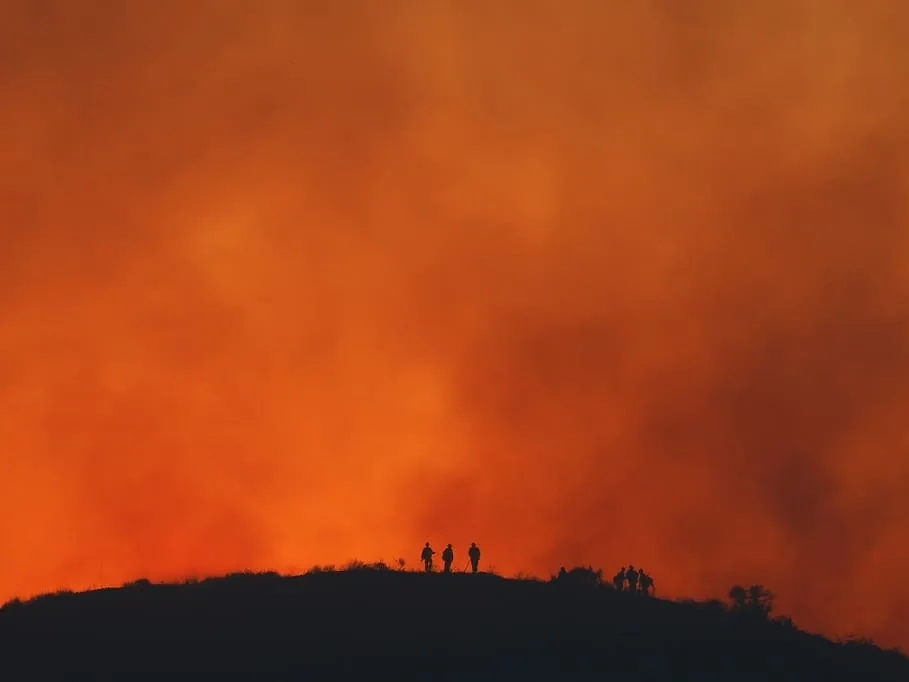
It also ties this wet-to-dry sequence to the conditions that helped set up the January 2025 Los Angeles wildfires. The report says two wet winters encouraged vegetation growth, then exceptional warmth and late rain dried that growth before powerful Santa Ana winds arrived.
Snowpack, groundwater and coastal flooding all face new pressure
California’s natural water storage is also expected to shrink. Under a high-emissions scenario, average early April snowpack could decline about 40% in 2041 to 2070 and 60% in 2071 to 2100 compared with the 1981 to 2010 average, the assessment says.
As more winter precipitation falls as rain and snow melts earlier, less water will remain stored for the dry months when demand is highest. That shift could put more strain on reservoirs and delivery systems built around older climate patterns.
Along the coast, the report warns that rising seas can threaten communities from below as well as through floodwaters. Higher sea levels can push groundwater upward, damage foundations and underground infrastructure, and spread contamination by affecting sewer lines, pipes and polluted sites.
With 3.3 feet of sea level rise by 2100, the assessment estimates shallow or emerging groundwater could affect 1.9 million coastal residents and $480 billion in property. It also says more than 1,500 active contaminated sites in the Bay Area could be inundated from below.
The report points to practical steps California can take now
The assessment does not create new regulations or set out an implementation plan, but it does outline ways to reduce risk. For flooding, it says directing floodwater onto suitable fields and floodplains can replenish groundwater while lowering downstream flood danger.
For heat, the report points to shade trees, reflective roofs and pavement, air conditioning and accessible cooling centers. Research cited in the assessment suggests expanded tree cover and reflective surfaces in Los Angeles County could prevent about a quarter of heat-related deaths during an extreme heat event.
On wildfire, prescribed burns could sharply reduce the chance of catastrophic fire for up to a decade after treatment, with some research cited in the report putting the reduction as high as 92%. The assessment also highlights Native American tribes’ work restoring cultural burning, rivers, wetlands and forests, while noting that funding barriers and limits on tribal authority can slow those efforts.
The report closes with a blunt reminder that the future is still being shaped. “The future is not predetermined,” it says. “The decisions made today can help California adapt to a changing climate and strengthen resilience for generations to come.”