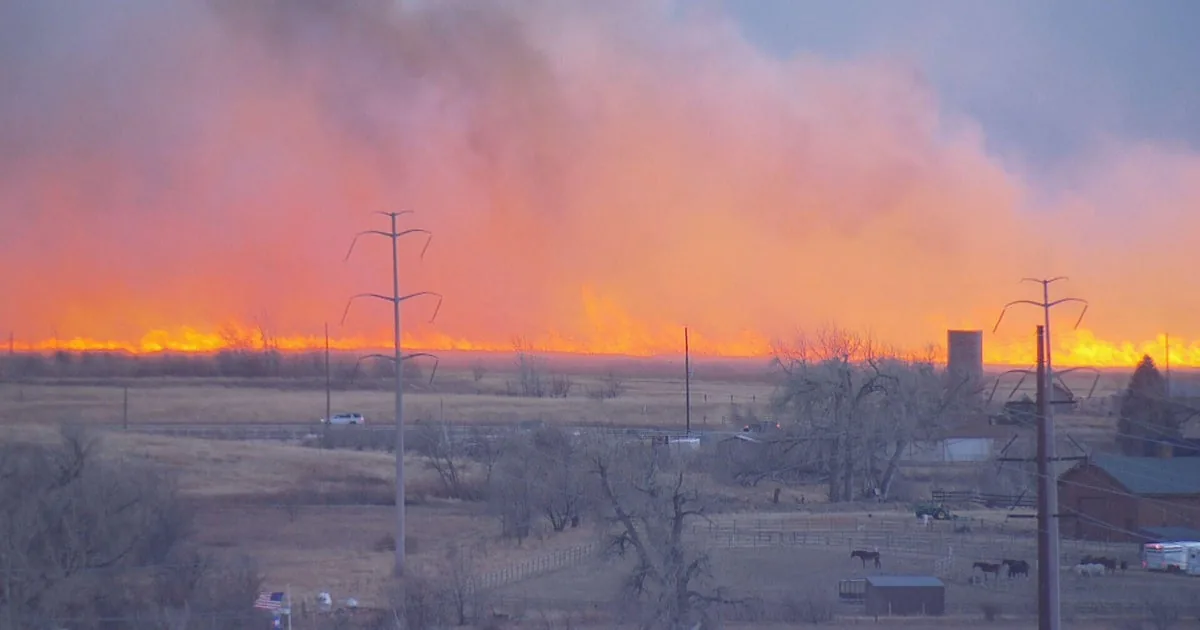
DENVER, CO — Colorado regulators are working on new rules that would govern when electric utilities can intentionally shut off power to lower wildfire risk. The discussion has become more urgent as fire danger grows across the state and utilities turn to Public Safety Power Shutoffs, or PSPS events, as one of their tools.
At a Public Utilities Commission hearing on Monday, utilities, local governments, consumer advocates and residents debated how often those shutoffs should happen and what protections should surround them. The proposed framework would require utilities to file wildfire mitigation plans every three years and explain how they identify high-risk areas, reduce the size and frequency of outages, and notify customers when shutoffs are coming.
Commission proposal would require wildfire plans and outage procedures
The draft rules would make utilities spell out more than just where wildfire danger is highest. They would also have to describe the mitigation steps they are taking, the process used to decide on a shutoff, and the ways customers will be warned before the power goes out.
Another key part of the proposal says PSPS events cannot be a utility’s main wildfire-safety strategy. Instead, the rules would push companies to treat them as one piece of a larger system of prevention and response. Regulators are trying to balance public safety with the real disruption that comes when electricity is cut off in homes, schools and businesses.
The broader question is how much caution is appropriate when the stakes are high. During the hearing, participants repeatedly returned to the tradeoff between shutting off electricity too readily and leaving energized equipment in place during extreme fire conditions.
Judge frames the central tradeoff between caution and danger
Administrative law judge Robert Garvey pressed that issue in a blunt exchange over whether regulators should prefer an unnecessary outage or a missed shutoff that could leave a neighborhood vulnerable to fire. He told those present that the decision is not an exact science and that perfect outcomes are unlikely.
Garvey’s comments captured the heart of the proceeding: regulators are trying to write rules for emergencies that can change quickly and unpredictably. The question is not only when to shut off power, but how to make sure the decision is defensible, consistent and grounded in public safety.
The hearing showed that there is no easy formula. Every group involved appeared to agree that wildfire risk is real, but they differed on how much discretion utilities should have and how strict the advance-warning requirements should be.
Xcel Energy says fast-moving weather needs flexibility
Xcel Energy argued that the rules should leave room for judgment when dangerous weather develops faster than expected. Company representatives said advance-notice requirements should not be written so rigidly that a utility loses the ability to respond to an urgent threat.
Tyler Manshold, assistant general counsel for Xcel Energy, said the company was concerned about making certain notification rules absolute prerequisites before a shutoff can happen. He pointed to the Marshall Fire as an example of a fast-moving event that, in the company’s view, would not have fit a strict advance-warning standard.
The utility’s position was that the commission needs to preserve flexibility for situations when conditions worsen suddenly. That argument placed Xcel on one side of a broader debate over whether the risk of acting too late is more serious than the burden of warning customers as early as possible.
Consumer advocates push shutoffs as a last resort
Consumer groups argued for a narrower approach, telling regulators that power shutoffs should only be used when other wildfire-reduction measures are not enough. Rick Arnett, speaking for Colorado Energy Consumers, urged the commission to define PSPS events as a measure of last resort.
Arnett said utilities should first show they have exhausted other available mitigation steps before cutting power to customers. He argued that public safety should remain the top priority, but that the burden should be on utilities to justify why a shutoff is necessary rather than assume it is an acceptable first option.
That position reflects concern that planned outages can affect many more people than the immediate fire threat. For residents and businesses, the cost of losing electricity can be significant even when the shutoff is meant to prevent a larger disaster.
Cities warn of business losses and medical hardships during outages
Local officials used the hearing to highlight the economic and personal consequences of planned outages. Littleton Mayor Kyle Schlachter said he supported creating a fund to help residents and businesses affected by shutoffs, especially those that lose revenue or depend on electricity for medical needs.
Schlachter suggested the service provider should help shoulder those costs, saying the burden should not fall entirely on customers and small businesses. His comments underscored a practical concern that wildfire policy is not just about preventing disasters, but also about protecting people from the disruption that comes with emergency utility actions.
Local governments also said the long-term answer should include more infrastructure upgrades so utilities rely less on shutoffs over time. Carolyn Elam with the City of Boulder said the goal should be to harden the system so PSPS events become less necessary in the future.
Utilities warn the new rules could be costly and expose them to lawsuits
Utility companies said the proposed regulations could create their own financial and legal burdens. Black Hills Colorado Electric estimated that complying with the rules could cost millions of dollars, according to Greg Sopkin, an associate general counsel for Black Hills Corp.
Company representatives also warned that more detailed requirements could increase the utilities’ exposure to legal liability. Their argument was that if regulators set overly rigid standards, utilities could face greater risk even when they are trying to act in good faith during dangerous weather.
The rulemaking remains in progress, and no final framework has been approved. Judge Garvey encouraged the public to keep submitting comments as regulators continue working toward a final wildfire mitigation and public safety power shutoff policy. The next hearing is expected in February.