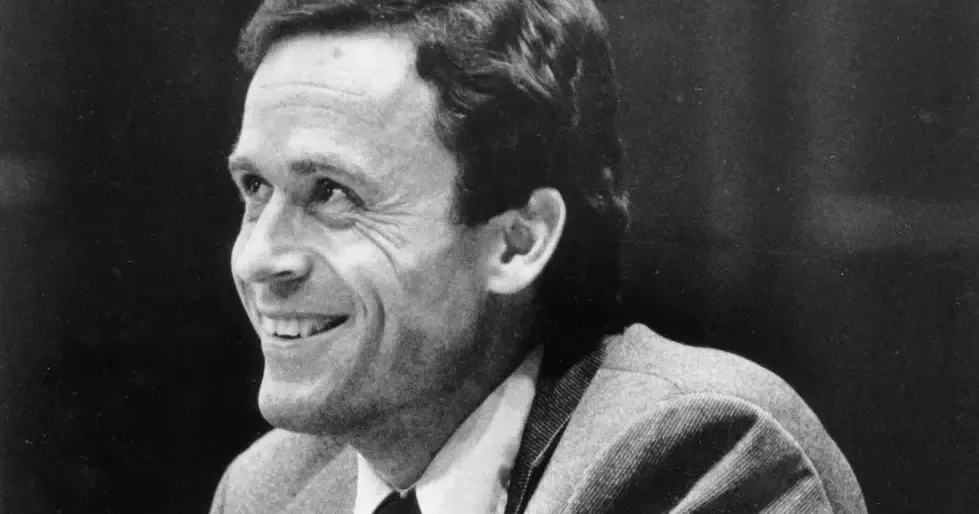
SALT LAKE CITY, UT — DNA evidence has linked serial killer Ted Bundy to the 1974 killing of 17-year-old Melissa Ann Smith in Utah, authorities said Tuesday, ending a cold case that had remained unresolved for more than five decades.
The announcement came exactly 52 years after Smith’s body was found in the woods by a hunter. Investigators said the case was solved through modern forensic testing and comparison with evidence tied to another Bundy victim. Summit County Attorney Margaret Olson said officials are satisfied Bundy was responsible for Smith’s death.
Bundy died in 1989, but law enforcement said advances in DNA analysis continue to confirm additional victims connected to him. Officials said Smith’s case had long fit Bundy’s known pattern of violence.
How investigators tied the case together through preserved evidence
Authorities said the breakthrough came from a connection between Smith’s case and that of Laura Aime, another Bundy victim whose case was resolved in Utah County last April. Investigators were able to use that relationship to strengthen the forensic link and revisit the evidence collected at the time of Smith’s death.
Utah County Sgt. Mike Reynolds said a highly similar DNA profile linked to Bundy was found in material obtained from Smith’s autopsy. That evidence gave investigators the scientific confirmation they needed to close the case.
Officials emphasized that the work depended on evidence preserved for years. Salt Lake County Sheriff Rosie Rivera said the case underscores why keeping old evidence matters, especially when testing methods improve over time.
Officials say Smith’s death matched Bundy’s pattern and opportunity
Along with the DNA findings, investigators said Smith’s killing showed the same traits they have seen in other Bundy crimes. Olson said the case reflected his “pattern, motive, means and opportunity,” language that helped authorities view the death as part of his broader criminal history.
Bundy was previously known for a series of murders across several states in the 1970s. Investigators said he killed at least 30 women and girls, though some cases remain unconfirmed and others were known only through later confessions or circumstantial evidence.
Smith’s case had stayed in the category of unresolved deaths for years, even as Bundy’s name remained one of the most notorious in American criminal history.
A case that had stayed open since 1974
Smith disappeared into the long shadow of Bundy’s crimes, and her death became one of Utah’s enduring cold cases. Officials said the body was discovered in the woods by a hunter, but the circumstances of the killing had not been fully settled until now.
The timeline made the announcement especially significant for investigators and Smith’s family. Authorities said they had contacted her next of kin, though none still live in the area.
For law enforcement, the case closure represents more than a historical correction. Reynolds said each solved case helps push Bundy’s legacy further from public memory, reflecting the continued work of investigators who have spent years revisiting old evidence.
Bundy’s crimes stretched across several states and decades
Bundy was executed in Florida in 1989 for the 1978 murders of two women at the Chi Omega sorority house at Florida State University. Before his death, he gave a series of confessions that included some crimes police had not previously connected to him.
Not every confession has been confirmed, but authorities said Bundy’s victims have been identified in multiple states, including Florida, Utah, Colorado, Idaho and Washington. The latest Utah case adds to that growing list as forensic science continues to sharpen the historical record.
Investigators also said they are still working to solve the death of 16-year-old Nancy Wilcox, another Utah teenager they believe was likely killed by Bundy.
What the ruling means for Utah investigators and families
The confirmation brings long-awaited clarity to one Utah family and another example of how modern DNA work can rewrite old cases. Officials said the evidence from Smith’s autopsy, paired with the later resolution of Aime’s case, gave them a path to close a death that had remained unsolved since 1974.
For investigators, the case reinforces the value of preserving physical evidence even when a case appears hopeless. It also shows how one solved investigation can unlock another, especially when earlier crimes share a common suspect and similar forensic traces.
Officials said the case is now closed, but the broader effort to identify all of Bundy’s victims is not finished. As Reynolds put it, every new closure is another step in erasing Bundy’s memory from the record of unsolved murders.