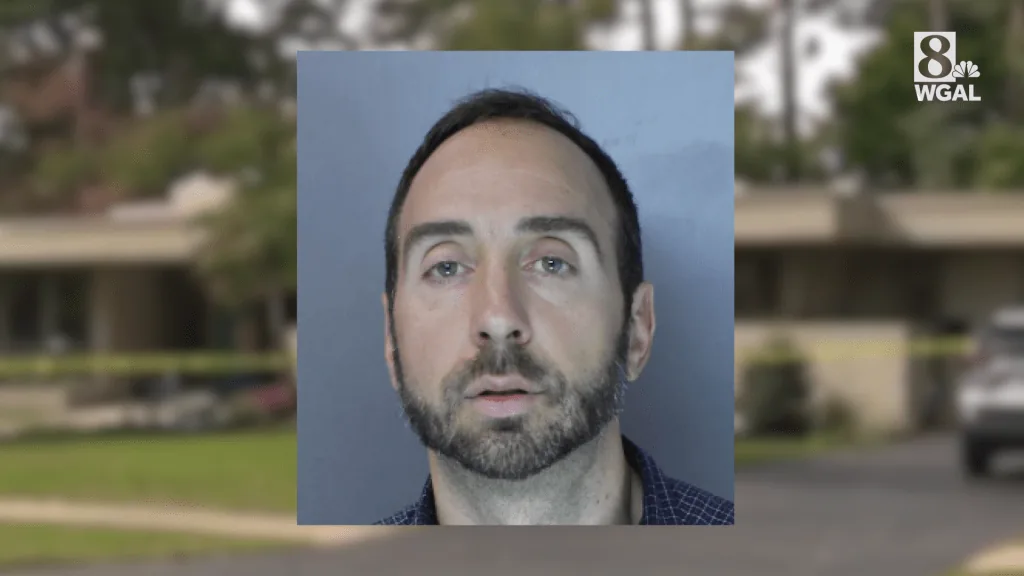
ERIE, PA — Police in Erie say the Pennsylvania man accused of killing eight people, including his pregnant daughter, exercised intense control over his family for years before the deadly shooting. Investigators described the home on Perry Street as severely unsanitary and said the picture that has emerged is one of isolation, domestic strain and long-running instability.
Authorities said they still cannot explain exactly why Matthew Stone Sr. carried out the attack. But Erie Police Chief Rick Lorah said detectives have established a clearer timeline of what happened on Friday, Oct. 9, and what family members had reported in the years before it. The victims included Stone’s wife, three of his children, two young grandchildren and two women who came to the house that evening.
Police describe a family living under strict control
Lorah said relatives told investigators that Stone had maintained “significant control” over his wife, children and grandchildren for years. According to police, he managed the family finances and limited when people could leave the house. That control, investigators said, helped define the household long before the shooting.
When detectives entered the home after the killings, they found conditions they described as extreme. Lorah said the shower, toilet and kitchen sink did not appear to work. Officers also found numerous 2-liter bottles filled with urine scattered throughout the house, a detail police used to illustrate how degraded the living conditions had become.
Those findings, officials said, are part of the broader effort to understand the environment inside the home before the violence erupted. Police have not said whether any outside agency had intervened in the family’s situation before the shooting.
Prior domestic violence case resurfaced in the investigation
Investigators also reviewed a 2019 domestic violence case involving Stone and his wife, Michelle Stone. Lorah said authorities charged Stone at the time after an incident in which a firearm was involved. Police identified that weapon as the same .40 caliber handgun believed to have been used in Friday’s shooting.
The earlier charges were later withdrawn after Michelle Stone changed her statement at a preliminary hearing, Lorah said. He did not say what led to that change, but the case now appears to be a key part of detectives’ effort to trace warning signs that may have existed before the attack.
Police also said family members had raised concerns about Stone’s mental health, possible physical health problems and suspected drug use, including methamphetamine. Investigators said they could not find medical records confirming a diagnosed mental illness. They did, however, find drug paraphernalia inside the home, while emphasizing that it remains unclear what role, if any, drugs played in the shootings.
Pregnant daughter had planned to leave the home
Among the dead was Angelina Stone, 24, who was pregnant and had reportedly been making plans to leave the family home after giving birth. Lorah said she had expressed concern about her father’s well-being and had tried last year to change her last name because she wanted to pursue a medical career.
In messages reviewed by investigators, Angelina Stone said her father was forcing family members out of the residence and had been physically abusive toward her brothers, the police chief said. Detectives also found her belongings packed in bags and boxes in her bedroom after the shooting, a detail that appeared to support her plans to move out.
Police have not said how far along she was in her pregnancy. The family’s reported tensions, however, were part of the picture investigators described as they outlined what they believe was happening inside the house before the gunfire started.
A call, gunfire and a partial barricade
Police said the afternoon of the shooting began with a Facebook Messenger call from Angelina Stone to her aunt, Lora Roberts, at about 4:39 p.m. The two talked for roughly two minutes, and when the call ended, Roberts said she was on her way to the home on Perry Street.
Within about 10 minutes, Roberts and Twila Tanner arrived outside the house. Three minutes later, Erie’s ShotSpotter system detected gunfire. Authorities said that sequence marked the start of the emergency response that would unfold over the next several hours.
Between 5 p.m. and 6 p.m., the SWAT and hostage negotiation teams were alerted. Officers later found that the front door had been partially barricaded before they breached it a little after 7 p.m., according to police.
Authorities found eight dead inside and on the second floor
Once officers entered the home, they found the bodies of the two young children on the first floor, followed by Angelina Stone on the stairwell. Police said Michelle Stone and the couple’s sons, Jonathan Stone and Matthew Stone, were later found inside the house as well.
Investigators said Matthew Stone Sr. was discovered on the second floor with an apparent self-inflicted gunshot wound. In all, police said eight people were dead: Michelle Stone, 44; Angelina Stone, 24; Jonathan Stone, 19; Matthew Stone, 21; two children ages 1 and 5; and Roberts and Tanner, who had come to the home shortly before the shooting.
Lorah said investigators still cannot say with certainty what happened inside the house between the phone calls and the shooting. He said the limits of the investigation remain important, even as police believe they have pieced together much of the timeline.
Erie leaders focus on grief, support and unanswered questions
At Thursday’s briefing, Erie Mayor Daria Devlin said the city must ask hard questions about whether there were opportunities to help the family before the violence. She asked whether warning signs were missed and whether local systems could have responded differently to a household that may have been struggling in isolation.
Devlin said she has begun speaking with health care leaders and community organizations about how to support families facing domestic violence and isolation. She said Erie’s immediate priority now is helping the Perry Street neighborhood and the wider community begin to heal after the loss.
“We cannot change what happened on Friday,” Devlin said, “But we can honor those we’ve lost through the care we show those who are grieving, the questions we are willing to ask, and the changes we make moving forward.”