TULAROSA, NM — A 24-year-old man is facing DWI-related charges after New Mexico State Police say he ran a stop sign and triggered a three-vehicle crash near Tularosa that injured 11 people and sent two victims to El Paso by air.
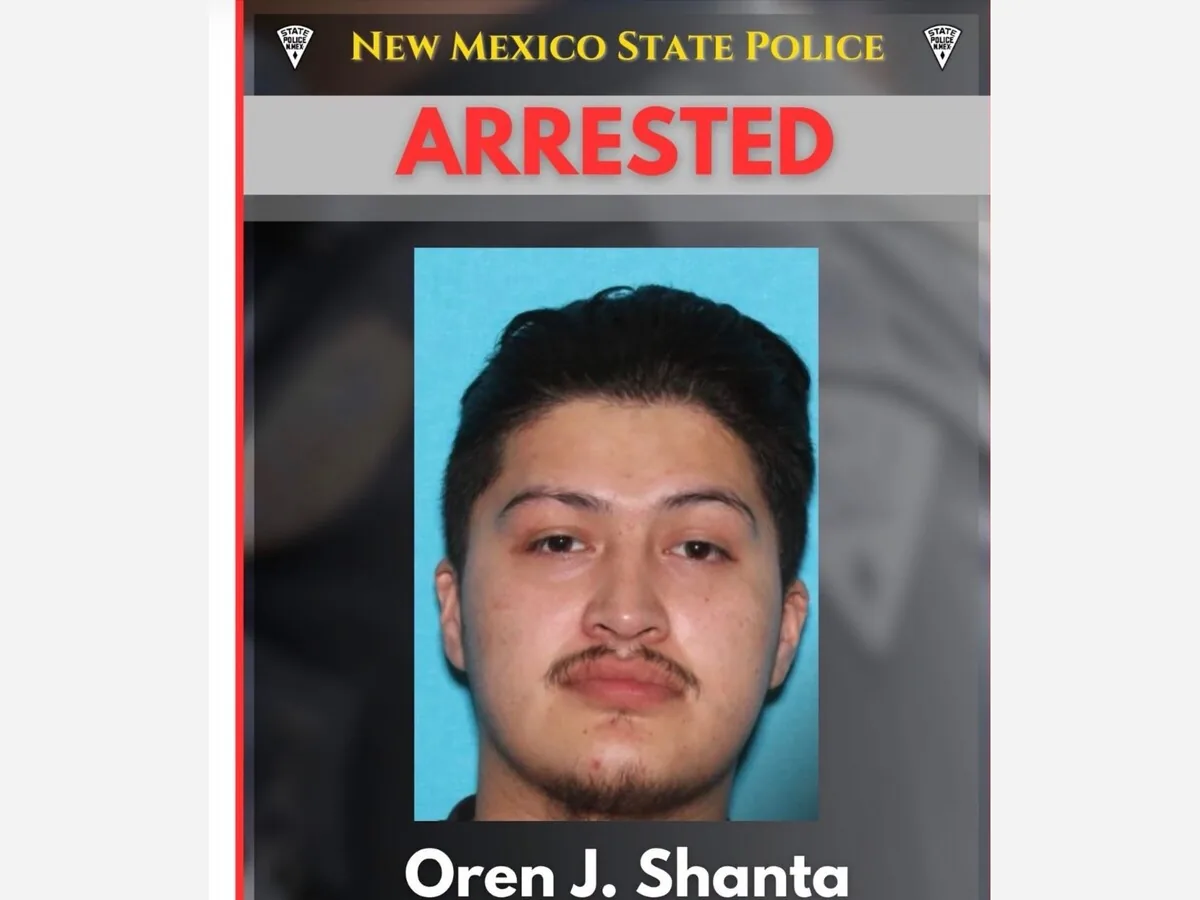
Authorities say the collision happened Friday afternoon, Nov. 6, 2026, at U.S. 70 and Old Mescalero Road. New Mexico State Police identified the driver as Oren J. Shanta and said he was arrested after the crash and booked on charges of great bodily harm by vehicle while driving under the influence and reckless driving.
No one was killed, but police said the crash left multiple people in need of hospital treatment and prompted a major emergency response.
Witnesses say the Chevrolet struck the van and SUV after a stop sign was ignored
New Mexico State Police said officers were called to the intersection around 4:04 p.m. and found a black Chevrolet passenger car, a white van and a silver SUV involved in the collision. Emergency medical personnel were already treating patients when officers arrived.
According to witness statements, Shanta was driving north on Old Mescalero Road at a high rate of speed when he failed to stop at the stop sign at U.S. 70. Police said the Chevrolet then hit the white van and the silver SUV.
The van was carrying 10 people, while the SUV had three occupants. The force of the crash caused a serious scene at the intersection and brought both medical and fire crews to the area.
Fire crews freed three people trapped inside the white van
Authorities said three people had to be extricated from the white van after the impact. Fire crews worked to free them while emergency medical staff treated the injured at the scene.
Police said at least six passengers from the van, two passengers from the Chevrolet and Shanta were taken to a local hospital. Two additional passengers from the van were later flown to a hospital in El Paso for further treatment.
The crash involved a total of 14 people across the three vehicles, and officials have not released the current condition of those who were hurt. The injuries were serious enough to require both ground transport and air transport.
Officers say they detected alcohol and other signs of impairment
Police said that when officers spoke with Shanta at the scene, they smelled alcohol on him and observed other indicators that led them to believe he was impaired. That observation became part of the investigation into the crash.
After further inquiry, officers arrested Shanta and filed the DWI-related charges. New Mexico State Police said the case includes a count of great bodily harm by vehicle and a count of reckless driving.
The arrest followed the on-scene investigation, witness accounts and the condition of the vehicles and injured people at the intersection.
No deaths were reported as investigators continue to review the crash
Officials said there were no fatalities from the collision. Even so, the number of injured victims and the need to airlift two passengers underscored how severe the crash was.
Police have not released details on whether any of the injured remained hospitalized or the extent of their injuries. The investigation is tied to the circumstances of the crash, the alleged stop sign violation and the suspected impairment of the Chevrolet driver.
New Mexico State Police said the information released so far came from its investigation at the scene near Tularosa.
What the charges mean under New Mexico law
Great bodily harm by vehicle is among the more serious traffic-related charges a driver can face in New Mexico when a crash is alleged to have caused major injury while the driver was impaired. Reckless driving is also a separate charge that can be filed when driving behavior is considered dangerously careless.
Authorities did not announce any additional charges beyond those listed in the arrest. As with any criminal case, the accusations remain allegations until proven in court.
Shanta is presumed innocent unless and until a court finds him guilty. For now, police say the crash remains a reminder of how quickly a traffic violation can turn into a mass-casualty emergency.