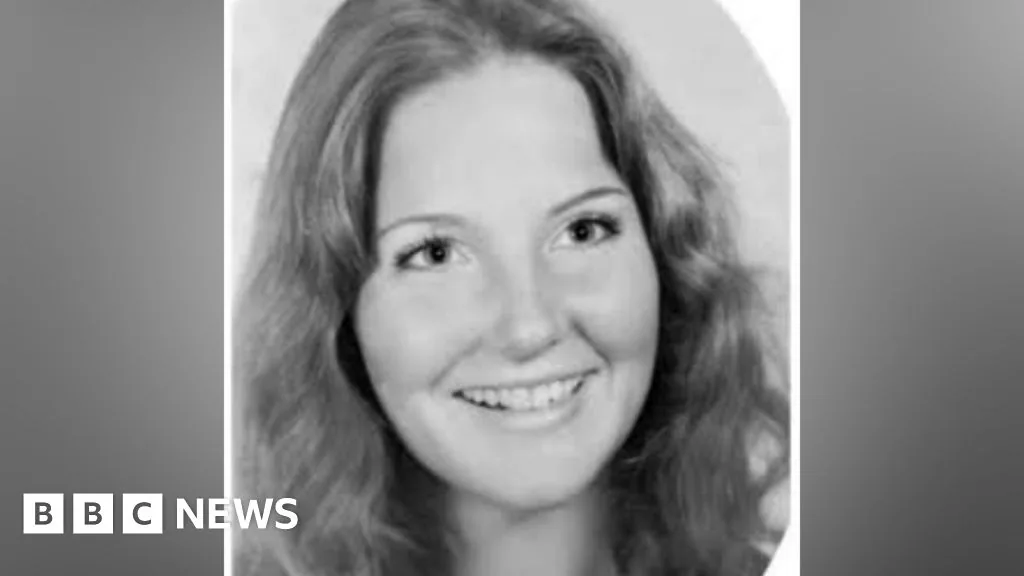
SALT LAKE CITY, UT — Utah authorities say advanced DNA testing has tied serial killer Ted Bundy to the killing of Melissa Ann Smith, a 17-year-old whose body was found by hunters more than five decades ago.
Smith, the daughter of a local police chief, was discovered on Oct. 27, 1974, with signs of rape and torture. Investigators announced the connection after recent forensic work helped them revisit one of the state’s longest-running cold cases.
The breakthrough adds another victim to Bundy’s known crimes in Utah and shows how preserved evidence can still produce answers years later. Officials say more cases tied to Bundy are still being reviewed.
How DNA from one case helped solve another
Utah officials said the Smith case was cracked after evidence from another Bundy-linked murder was examined this year. In April, state investigators identified Laura Ann Aime as another of Bundy’s victims, and the evidence gathered in that case was later used to help resolve Smith’s death.
That kind of cross-case forensic work can be especially valuable in older investigations, where physical evidence has been stored for decades and new testing methods may reveal what earlier technology could not. Officials did not describe every item tested, but they credited modern DNA analysis for making the identification possible.
The case also underscores why investigators keep evidence for long periods even when there is no immediate path forward. In this instance, preserved material from one homicide became the key to another unsolved murder from the same era.
Officials say more Bundy cases in Utah remain under review
At a news conference Tuesday, Utah County Sgt. Mike Reynolds said investigators are still examining other potential Bundy cases in the state. He said each closure helps push Bundy’s memory further into the past.
Salt Lake County Sheriff Rosie Rivera said the ruling should encourage families who have waited years for answers. She said cold case victims should see the announcement as proof that “there is hope out there.”
Rivera also praised detectives for keeping evidence safe for so long. She said the decision to preserve material across decades “demonstrates the need to preserve evidence even when decades pass,” especially when technology keeps improving.
Bundy’s Utah crimes remain part of a broader murder history
Bundy was one of the most notorious serial killers in American history and was linked to at least 30 murders across the United States. Before his execution in 1989, he confessed to killing two other teenage girls in Utah, and investigators have continued to examine his possible involvement in other deaths.
His crimes began in the Pacific Northwest, where he attacked victims across the region before moving through other parts of the country. Authorities have long described a pattern in which he used charm or a false injury to gain women’s trust before taking them to secluded locations.
That pattern helped investigators connect earlier cases to him, but many of the crimes took years to confirm. The Smith identification shows that even after Bundy’s death, forensic work is still reshaping the historical record of his killings.
A long cold case now gives one family an answer
For Smith’s family, the identification closes one of Utah’s most painful unsolved murders. Her death had remained a mystery since hunters found her body in 1974, and the case had lingered as one of the state’s enduring cold cases.
More than 50 years later, investigators now say they can place Bundy at the center of the crime. The announcement does not erase what happened, but it gives the case a documented resolution and adds certainty to a story that had remained open for generations.
Cold case breakthroughs like this can change how families remember a loss and how investigators approach other unsolved homicides. In Utah, officials say the work is not finished and that more review of Bundy-related cases continues.
Utah still has hundreds of unsolved death investigations
The announcement comes against a broader backdrop of unresolved deaths in Utah. In April, the director of the Utah Bureau of Forensic Services told the Salt Lake Tribune that the state had 444 unsolved death investigations, including 258 homicides.
That number helps explain why officials continue to stress evidence preservation and repeated forensic review. Older cases can sit untouched for years until a new method, a new sample or a new comparison makes a breakthrough possible.
For investigators, the Bundy case is both a reminder of the scale of cold-case work and a demonstration of what modern testing can do. For families, it offers the possibility that even very old cases may still be solved.