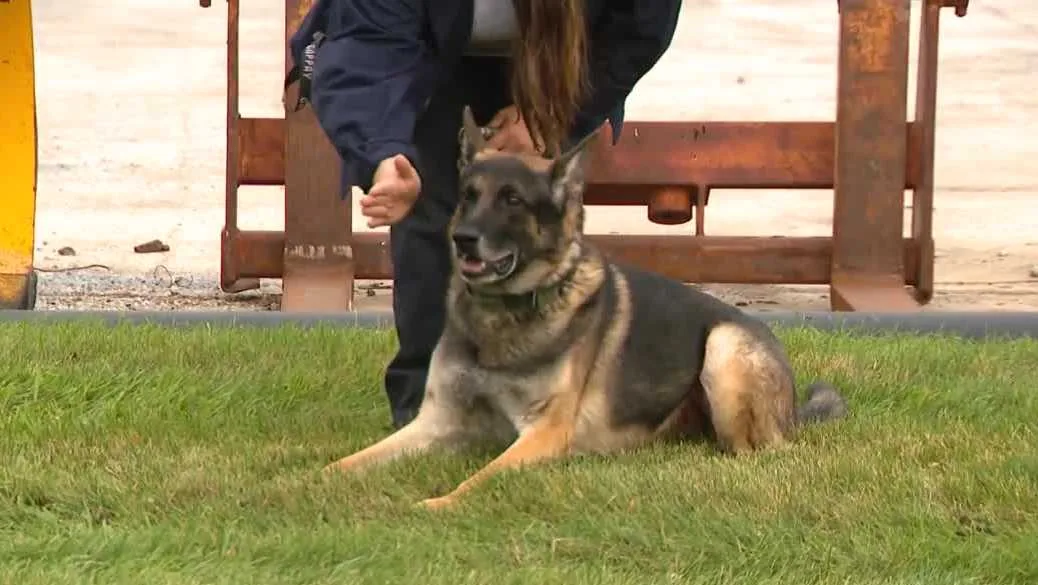
CLIVE, IA — Search and rescue teams in Iowa are relying on highly trained K-9s to help locate people trapped in collapsed buildings, a skill on display Tuesday at the Clive Public Safety Building on Hickman Road. Iowa Task Force 1 and Urban Search and Rescue handlers showed how the dogs can quickly narrow the search area when lives may be on the line.
The demonstration highlighted why rescue dogs are such a critical part of disaster response. According to handlers, the dogs can often pinpoint an area within minutes, giving crews a target zone instead of forcing them to search a damaged structure piece by piece for days.
Collapsed structures are a major part of Iowa disaster response
Handlers said most state task force deployments involve collapsed structures caused by tornadoes or floods. Those scenes can be chaotic, dangerous and time-consuming, especially when rescuers are trying to find survivors inside unstable debris.
In those situations, dogs are used to help direct human crews to the exact spot where rescue work should begin. That can make the difference between broad, exhausting searches and focused efforts in the place where victims are most likely to be found.
The team’s presentation underscored that K-9 work is not a side task. It is built into the broader response plan for disasters that can overwhelm human searchers alone.
Why handlers say the dogs are so effective
Canine search specialist Lauren Denison said no human searcher would likely be able to find victims as quickly without the dogs. She said the animals can identify a precise area in a matter of minutes, allowing rescuers to concentrate their effort where it matters most.
Denison said the dogs are selected for their fearlessness and confidence. They need to be willing to go into places that most people would consider dangerous or frightening, including rubble piles and other unstable scenes.
She also said the dogs may be lifted on ropes or transported by helicopter, depending on the assignment. That means they have to be comfortable with a wide range of environments and rescue conditions.
Training the dogs and the handlers takes extensive preparation
Denison said the dogs do not reach this level of work without extensive training, and their handlers train just as hard. The process is designed to protect both the animals and the people working beside them in dangerous environments.
Selection starts with testing the dog’s courage, desire to play with a tug, athletic ability and overall health. Those traits help determine whether a dog is suited for the demands of search and rescue missions.
Handlers then go through awareness training for the task force’s specialties before spending significant time on their own methods. That includes learning search strategy, safe scene approaches, how to keep dogs out of harm’s way and how to communicate what a dog has found so rescuers can act on it.
Keeping the dogs safe is part of the mission
Even though the dogs are trained for dangerous work, handlers still have to watch for injuries and other risks. Denison said injuries usually involve something minor, such as a broken toenail or a cut pad, but they can still affect the dog’s ability to keep working.
That is why handlers are expected to monitor the animals closely during and after operations. The work requires trust between the dog and the handler, but it also depends on the handler noticing when a dog needs help or needs to be pulled back from a scene.
Safety, Denison said, is not just about getting into a collapsed structure. It is also about making sure the animals that search it can do their jobs without unnecessary harm.
Live find dogs and human remains dogs serve different roles
Officials described two main types of rescue K-9s used in the field. Live find dogs are trained to locate missing people in wilderness areas, flood waters and collapsed structures where survivors may still be alive.
Human remains dogs serve a different purpose. They are used in recovery missions to help families get closure after disasters and to assist law enforcement in searches for missing people.
Both kinds of dogs serve important but distinct roles, depending on the circumstances of the emergency. In either case, handlers said the animals bring a level of speed and precision that human teams alone cannot match in the same way.
A public look at a specialized rescue tool
The Clive demonstration offered a rare look at how rescue K-9s fit into disaster response before an emergency happens. By showing the dogs’ abilities in a controlled setting, Iowa Task Force 1 and Urban Search and Rescue handlers gave the public a clearer picture of what happens after a collapse.
The demonstration also highlighted the level of preparation behind each mission. From selecting the dogs to training the handlers and coordinating the search, the process is designed to make the teams effective when the call comes in for a tornado, flood or other structural disaster.
For responders, the goal is simple: get to the right place faster, save time and improve the chances of finding people when every minute counts.