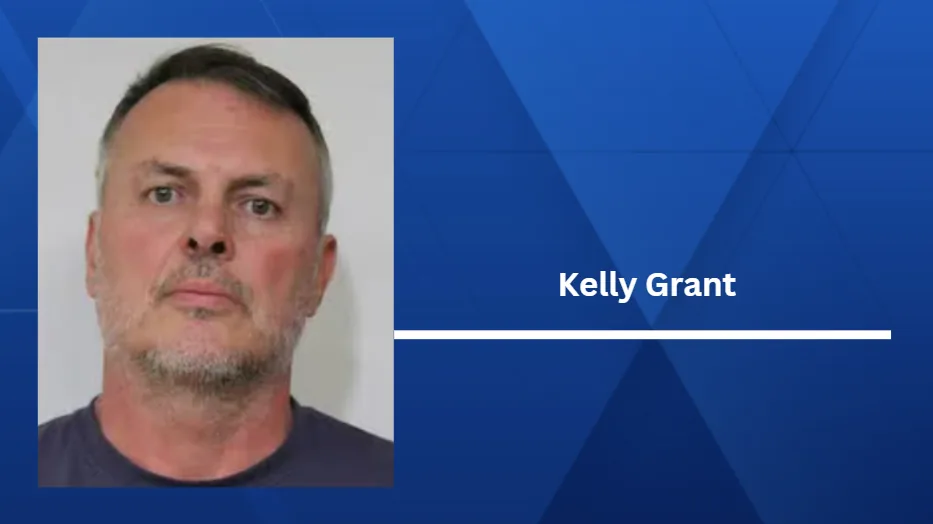
WATERLOO, IA — A Minnesota man has been charged in the killing of a Waterloo woman whose body was found in a creek-side area in 1995, ending one of Black Hawk County’s long-running cold cases. Authorities say 59-year-old Kelly Grant of Bertha, Minnesota, was arrested Friday by law enforcement agencies in Iowa and Minnesota.
Grant faces a first-degree murder charge in the death of 37-year-old Angela Renee Buck, who was shot in August 1995. Investigators say Buck’s body was discovered by turtle hunters near a bridge along Pilot Grove Road. The arrest came after years of work by multiple agencies reviewing witness statements, interviews and other evidence tied to the case.
How investigators say the killing unfolded in 1995
According to a criminal complaint, Buck, Grant and other people were together at a home in Waterloo on the night before her death and into the early hours of Aug. 11, 1995. The home was in the 300 block of Cottage Street. The complaint says a fight broke out and that Buck was assaulted.
Authorities say a witness told them Grant and another man forcibly removed Buck from the home and put her into a vehicle before driving away. Investigators also noted that Buck did not own a car, which they say mattered in reconstructing what happened after she left the residence.
Medical examiner ruled Buck died from a gunshot wound
The Iowa State Medical Examiner determined that Buck died from a gunshot wound. That finding matched the way her body was discovered and became a central fact in the case as investigators pieced together the circumstances surrounding her death.
Turtle hunters found Buck’s body lying along the creek bank near the bridge in the area of the 900 block of Pilot Grove Road. The location, combined with the medical examiner’s findings, helped law enforcement focus on the hours after she was last seen alive in Waterloo.
Witness statements and changing stories pointed investigators toward Grant
Law enforcement officials with the Black Hawk County Sheriff’s Office, the Iowa Division of Criminal Investigation, the Black Hawk County Attorney’s Office and the Iowa Attorney General’s Office Cold Case Unit spent years following leads in the case. Their work included repeated interviews and review of earlier statements from people connected to Grant and Buck.
One person told investigators that Buck was killed because she had stolen from them. Officials also said Grant was interviewed multiple times over the years, and that his accounts of where he was at the time of the shooting changed repeatedly. Investigators say those inconsistencies became part of the evidence they used to build the case.
2025 lead added a second motive theory
The criminal complaint says investigators learned in 2025 of an additional possible motive for the homicide. That information suggested Buck was falsely believed to be giving law enforcement information about drug activity in the area around the house where the fight happened.
Authorities said that new lead, along with the witness account describing a man matching Grant’s appearance helping remove Buck from the residence, strengthened the case against him. The complaint also says Grant made statements that implied he was involved in the killing, which prosecutors say added to the evidence already collected over the years.
Cold case work led to a murder charge three decades later
The complaint concludes that Grant participated in the kidnapping and murder of Angela Buck on or around Aug. 11, 1995. On that basis, authorities charged him with first-degree murder after more than 30 years of investigation.
The arrest reflects a coordinated effort between Iowa and Minnesota agencies to revisit the old evidence and pursue new leads. For Buck’s family and for investigators who worked the case over many years, the charge marks the first major criminal step in a homicide that had remained unsolved since the mid-1990s.
What the arrest means for the long-running case
Grant’s arrest does not change the basic facts of the case as investigators describe them: Buck was last seen with Grant and others in Waterloo, later found dead near Pilot Grove Road, and determined to have died from a gunshot wound. What changed was the ability of investigators to assemble a timeline and connect witness accounts, old interviews and newly surfaced information into a criminal complaint.
Black Hawk County officials said the case involved years of work across multiple agencies. With the arrest now made, the court process will determine how the evidence is tested and what happens next in a homicide investigation that had remained active for decades.