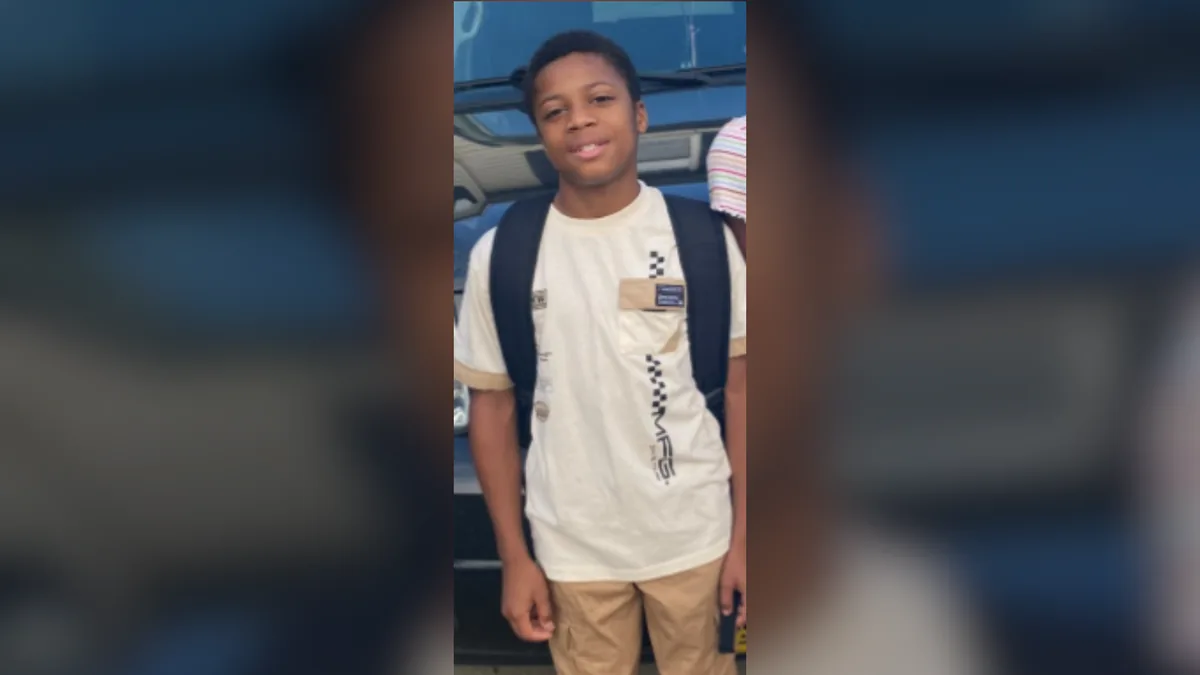
KANSAS CITY, MO — Kansas City police say a 13-year-old boy diagnosed with autism has been found safe after officers asked the public to help locate him. The child, Noah Reaves, had been reported missing after he was last seen on foot near East 53rd Street and Hardy Court, an area along the border between Kansas City, Missouri, and Raytown.
The Kansas City Police Department released the alert while searching for him and asked anyone who saw the boy to contact authorities right away. Reaves was later located, ending the search. Police did not provide additional details about where he was found or the circumstances of his disappearance.
Where police say Noah Reaves was last seen
According to Kansas City police, Reaves was last seen walking near East 53rd Street and Hardy Court. That location sits close to the city line separating Kansas City and Raytown, which helped narrow the area of concern for the search.
Police identified Reaves as 13 years old and said he has been diagnosed with autism. His disappearance prompted a public notice because officers wanted as many people as possible to be on the lookout for him in the surrounding neighborhoods and streets.
The department’s missing-persons alert gave the public a specific place and time frame to focus on while searching. In cases like this, police often rely on nearby residents, drivers and passersby to help spot someone quickly before the person moves farther away.
What police said he was wearing
When officers issued the alert, they described Reaves as wearing a two-tone blue jacket, red pajama pants and black and gray athletic shoes. Police also said he is about 4 feet, 10 inches tall and weighs roughly 75 pounds.
Reaves has black hair and brown eyes, according to the department. Those physical details were included so the public could better recognize him if he was seen in the area or elsewhere nearby.
Missing-person alerts often depend on those kinds of details because even small clothing descriptions can help someone identify a child quickly. Police used the description to increase the chances that a witness or driver would notice him and call in a sighting.
How the Kansas City Police Department asked for help
The Kansas City Police Department urged anyone who saw Reaves to call 911 or contact its Missing Persons Unit at 816-234-5043. The request was made while the search was active and before police confirmed he had been found safe.
That kind of appeal is common in missing-child cases, especially when a young person may need extra support or quick intervention. Police wanted immediate tips rather than delayed calls because time can matter in a search.
By putting the phone number and emergency instructions into the alert, investigators gave the public a direct way to relay information. The department’s message was aimed at neighbors, commuters and anyone traveling through the border area that afternoon.
Why autism made the search especially urgent
Police noted that Reaves has been diagnosed with autism, a detail that can affect how officers and the public respond in a missing-person case. The department did not say whether he had any known medical emergency, but the diagnosis added urgency to the effort to locate him.
When a missing child may need added support or could be less able to communicate with strangers, police often push a broader public alert. That can help bystanders recognize the seriousness of the situation and contact authorities sooner.
In this case, the alert focused on a child last seen on foot in a residential area near the Kansas City-Raytown border. The goal was to widen awareness quickly while officers and the community helped search for him.
Search ended after police confirmed he was safe
After the initial alert, Kansas City police updated the public to say Noah Reaves had been found safe. That confirmation closed out the search and relieved the immediate concern that had prompted the missing-person notice.
Police did not release further information about how long he had been missing or where he was recovered. They also did not say whether anyone else was involved or whether additional follow-up would be needed.
For families and neighbors watching a missing-child case unfold, a safe recovery is the outcome they hope for most. In this instance, the department’s update signaled that the search had reached a positive conclusion.
What the public was told during the alert
During the search, police gave the public a clear description of Reaves, the area where he disappeared and the numbers to call if he was seen. That information was intended to move quickly through the community until officers could locate him.
The alert also reflected how local law enforcement uses neighborhood awareness in real time. When a child is missing, especially one with autism, a fast response from the public can make a difference in spotting someone nearby before the search grows wider.
With Reaves now found safe, the immediate concern is over. Kansas City police had asked the community to stay alert until they could confirm the boy had been located.